Tēdelūpulo – Spa de cerveza en Buenos Aires

El primer beer spa de Argentina. Rituales sensoriales con lúpulo, malta y agua en Almagro, CABA. Hidromasaje, masajes y cerveza libre tirada para parejas, grupos y planes individuales.

Tēdelūpulo – Beer Spa. Mario Bravo 890, Almagro, CABA. Abierto martes, jueves, viernes, sábados y domingos de 11:00 a 00:00. WhatsApp +54 9 11 2529-9525.

Preguntas frecuentes

¿Qué es Tēdelūpulo?

Tēdelūpulo es el primer y único spa de cerveza de Argentina. Abrió en 2018 en Almagro, CABA, y ofrece circuitos sensoriales que combinan hidromasaje, sauna lupulado, masajes y cerveza libre tirada.

¿Dónde queda el spa?

En Mario Bravo 890, barrio de Almagro, Ciudad Autónoma de Buenos Aires. A pocas cuadras del subte línea B (estación Carlos Gardel) y de Palermo.

¿Qué incluye un circuito?

Según el ritual: hidromasaje en tina de cobre, sauna de eucalipto y lúpulo, masajes, gastronomía dulce y salada, y barra de cerveza artesanal libre durante toda la experiencia.

¿Cuánto dura una experiencia?

Los circuitos duran entre 90 y 120 minutos según el ritual elegido. Recomendamos llegar 10 minutos antes para registrarse.

¿Hay edad mínima?

Sí, es indispensable ser mayor de 18 años para ingresar al spa, ya que la experiencia incluye consumo de cerveza.

¿Puedo regalar una experiencia?

Sí. Tenemos vouchers de regalo con 4 meses de validez, disponibles online y canjeables por cualquier ritual del spa.

    Tēdelūpulo - Spa de cervezaTēdelūpulo - Spa de cerveza en Almagro
    ES
    Wellness atlas

    Non-traditional spas around the world

    A guide to the planet's most original spas: wine, chocolate, beer, sake, coffee, salt and hay. From Bordeaux to Hakone, from Krakow to Almagro — where they began, what they offer and which ones exist in Argentina.

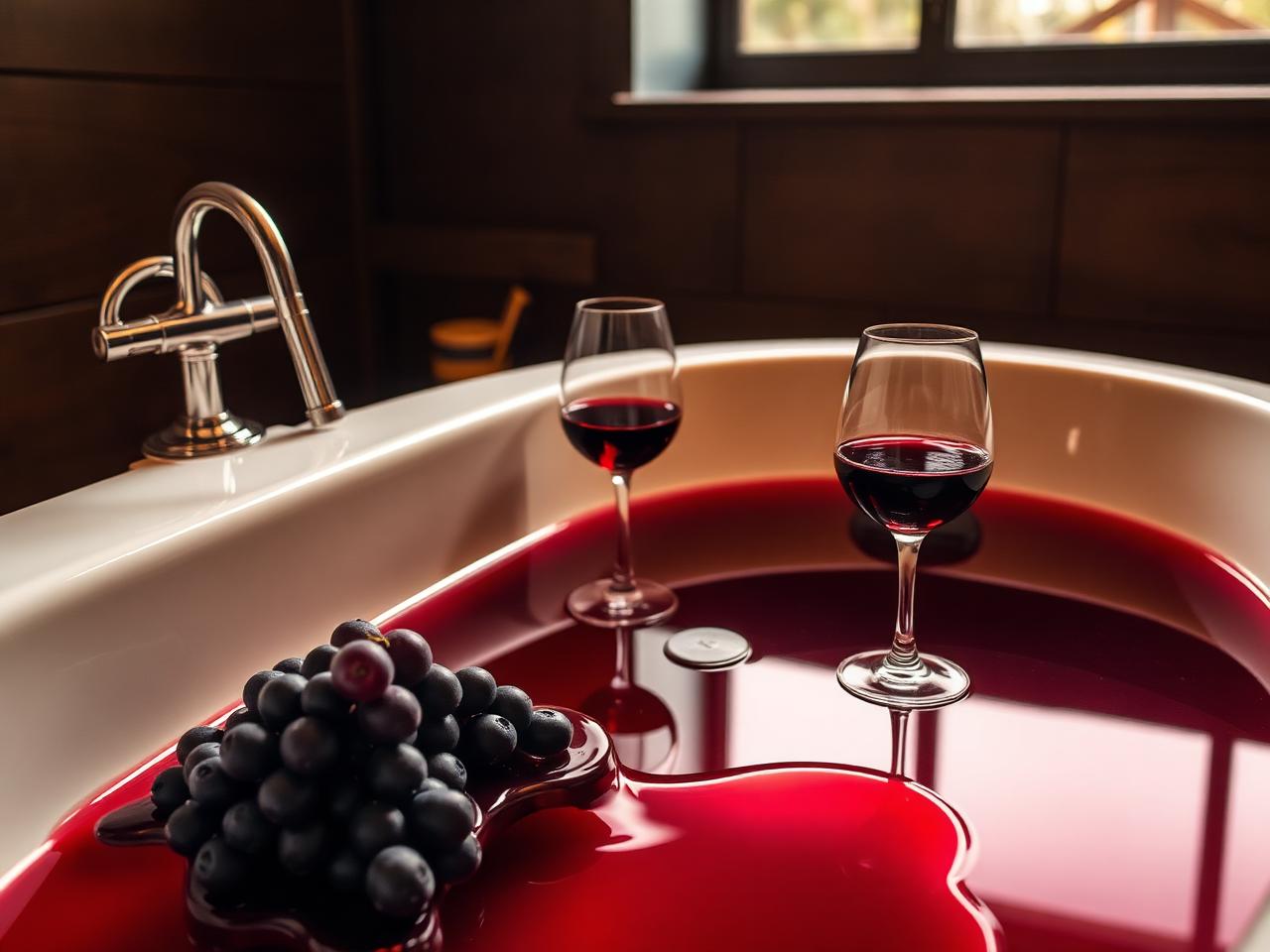
    Red wine bathtub with glasses and a grape cluster, editorial illustration of non-traditional spas around the world

    11 destinations

    7 ingredients

    wine, beer, cocoa and more

    What is a non-traditional spa

    When the ritual stops being silent

    For decades the word spa meant the same thing everywhere: white robe, absolute silence, ginger tea. But from the late 1990s a second generation of spas broke that script. Instead of neutralising the atmosphere, they built it around a single ingredient: wine in Bordeaux, chocolate in Pennsylvania, beer in the Czech Republic, sake in Japan, coffee in Colombia, salt deep underground in Poland, Alpine hay in Italy.

    They didn't replace classic balneotherapy — they rewrote it. Water temperature, circulatory benefits and massages are still the same. What changed is the atmosphere, the music, the scent and — above all — the reason to go. A non-traditional spa is a shared plan, a travel destination, a memorable gift.

    In Argentina the category arrived late, but it arrived. Buenos Aires has Tēdelūpulo, the country's only beer spa since 2018, and Mendoza has the Termas de Cacheuta with volcanic mud and a grape-must bath. Two local takes on the same global movement.

    Wellness map

    The most important non-traditional spas

    Eleven destinations, eleven ways to reinterpret the bath. Argentina, Europe, the Americas and Japan.

    Us

    01 · Beer spa · Since 2018

    Tēdelūpulo

    Buenos Aires (Almagro) · Argentina

    Argentina's first and only beer spa. At Mario Bravo 890 it offers circuits for couples and groups with malt and hops hydromassage, hop-infused sauna, simultaneous massages and unlimited draft beer. A Buenos Aires take on Czech balneotherapy, with five themed rituals and the only spa taproom in South America.

    What makes it uniqueThe country's only beer spa, open Tuesday, Thursday, Friday, Saturday and Sunday from 11 am to midnight.

    02 · Wine spa · Since 1999

    Caudalie Vinothérapie Spa

    Bordeaux (Château Smith Haut Lafitte) · France

    The global pioneer of the wine spa. Caudalie invented vinotherapy using grape-seed polyphenols in the heart of a Bordeaux vineyard. The Barrique Bath, grape-pulp wrap and honey-and-wine massage are signature rituals. Today it has locations in Paris, New York, Madrid and Marrakech.

    What makes it uniqueWorld patent for vinotherapy and the original French oak barrel bath.

    03 · Chocolate spa · Since 2001

    Hotel Hershey Chocolate Spa

    Hershey, Pennsylvania · United States

    The world's most famous chocolate spa, inside the historic Hotel Hershey. Cocoa baths, chocolate foot fondues, brown sugar scrubs and cocoa butter massages. The whole aesthetic, from the walls to the scent, is deluxe Willy Wonka.

    What makes it uniqueCocoa Bath, Whipped Cocoa Bath and Chocolate Fondue Wrap registered as proprietary rituals.

    04 · Themed onsen (wine, sake, coffee, green tea) · Since 2001

    Hakone Yunessun

    Hakone · Japan

    The most eccentric onsen water park in the world. Separate pools of red wine, Japanese sake, freshly ground coffee, green tea and seasonal ramen and curry. Each pool is refreshed several times a day with the real liquid diluted in thermal water.

    What makes it uniqueSake, wine, coffee and green tea pools with an hourly pouring ceremony.

    05 · Hay bath (Heubad) · Since 1903

    Hotel Heubad

    Völs am Schlern, South Tyrol · Italy

    The only hay bath with protected designation in the world. The guest is submerged in freshly cut, fermented Alpine hay that releases essential oils. The Tyrolean tradition, documented since the 19th century, is now recognised as a balneotherapy treatment by the Italian health system.

    What makes it uniqueHay harvested at 1,800 m, the only Heubad with a protected designation of origin.

    06 · Hammam + wine bath · Since 2008

    Aire Ancient Baths

    Seville, Barcelona, New York, Chicago · Spain / USA

    A contemporary reinterpretation of Roman, Arab and Ottoman baths inside restored historic buildings. The star is the Wine Bath: a private tub filled with tempranillo at 36 °C, combined with the cold, warm and hot pool circuit.

    What makes it uniqueTempranillo wine bath inside a 16th-century palace in Seville.

    07 · Underground salt spa · Since 1839

    Wieliczka Salt Mine Spa

    Wieliczka (near Krakow) · Poland

    Europe's oldest halotherapy spa, 135 metres underground inside a 13th-century salt mine. The salt microclimate has been used against asthma and respiratory issues since the mid-19th century. Today it combines brine baths, inhalations and rest sessions under vaults carved out of salt.

    What makes it unique135 m deep, a unique microclimate declared a UNESCO World Heritage Site.

    08 · Hot springs with mud and wine bath · Since 1915

    Termas de Cacheuta

    Cacheuta, Mendoza · Argentina

    Pre-Andean hot springs in Mendoza with a 'mountain spa' circuit that combines thermal waters, a volcanic mud bath and, since 2014, a malbec grape-must bath as the closing step. The crossover between classic balneotherapy and local vinotherapy.

    What makes it uniqueThe only Argentine circuit that combines natural hot springs, mud and a grape-must bath.

    09 · Arab hammam · Since 1998

    Hammam Al Ándalus

    Granada, Córdoba, Madrid, Málaga · Spain

    A literal reconstruction of the Andalusian Arab baths inside buildings sitting on top of 12th-century hammams. Cold, warm and hot rooms, black soap massage and herbal tea. Not exotic exactly, but very different from a modern European spa: a historic ritual restored in detail.

    What makes it uniqueBuildings constructed on top of the original Arab baths of the Albaicín.

    10 · Coffee spa · Since 2015

    Green Coffee Spa – Hacienda Espíritu Santo

    Coffee Axis, Quindío · Colombia

    In the heart of the Coffee Triangle: scrubs with freshly roasted coffee grounds, wraps with green coffee butter and immersion baths infused with specialty coffee. Paired with a single-origin coffee tasting at the end of the ritual.

    What makes it uniqueCoffee harvested on the same estate, a fully traceable scrub.

    11 · Pre-Hispanic ceremonial bath · Since Pre-Columbian

    Mayan Temazcal

    Riviera Maya and Yucatán · Mexico

    The oldest spa in the Americas. The temazcal is an igloo-shaped adobe hut where red-hot volcanic stones are sprayed with water and herbs (copal, rue, rosemary). Led by a temazcalero, it combines sauna, ceremony and Mayan spiritual cleansing.

    What makes it uniqueA continuous ritual since pre-Hispanic times, now part of the Latin American wellness offering.
    Argentina

    Non-traditional spas in the country

    Two concepts in two provinces: beer in Buenos Aires and hot springs with grape must in Mendoza.

    Tēdelūpulo

    Buenos Aires · Beer

    The country's first and only beer spa, in Almagro. Five rituals for couples and groups with unlimited draft beer.

    Discover →

    Termas de Cacheuta

    Mendoza · Hot springs + grape must

    Pre-Andean hot springs with a volcanic mud bath and a malbec grape-must bath as the closing step of the circuit.

    Frequently asked questions

    About non-traditional spas

    What is a non-traditional spa?

    A non-traditional spa replaces the classic ritual (silence, neutral oils, herbal tea) with an experience built around a specific ingredient or tradition: wine, beer, chocolate, salt, hay, sake, coffee or ancestral ceremonies like the temazcal. The balneotherapy is the same; what changes is the atmosphere and what's in the bath.

    Are there non-traditional spas in Argentina?

    Yes. Tēdelūpulo in Buenos Aires (beer spa, the country's only one since 2018) and Termas de Cacheuta in Mendoza (hot springs with mud and a grape-must bath). Two different concepts, in two provinces.

    Which was the first non-traditional spa in the world?

    It depends on how you count. The Wieliczka Salt Mine Spa in Poland has operated as a salt spa since 1839. The hay bath at Hotel Heubad in Italy has been documented since 1903. As a modern spa with a registered concept, Caudalie launched vinotherapy in 1999, creating the category as we know it today.

    Do you actually drink the beer, wine or chocolate from the tub?

    No. The bath liquid is diluted with thermal or mineral water, mixed with cosmetic actives and temperature-controlled for the skin, so it's not safe to drink. That's why all of these spas have a separate bar to enjoy the same product during the ritual: draft beer, a glass of wine or chocolate fondue.

    What are the real benefits of these rituals?

    Each active brings something different: wine polyphenols are antioxidants; hops and malt provide B vitamins; cocoa butter deeply moisturises; salt helps the respiratory system; fermented hay releases anti-inflammatory essential oils. On top of that, the universal benefits of warm water (34–37 °C): circulation, muscle relaxation and rest.

    Which one is best for a first experience?

    If you've never tried a non-traditional spa, the most accessible in Argentina is Tēdelūpulo in Buenos Aires: short circuits (90–120 min) for couples or groups, with beer included and online booking. The easiest way into the category without travelling.

    Want to go deeper into one? Guide to beer spas around the world · Beer spa vs traditional spa

    A non-traditional spa in Buenos Aires

    No need to travel to Bordeaux or Hakone. Argentina's only beer spa is in Almagro, open Tuesday, Thursday, Friday, Saturday and Sunday from 11 am to midnight.

    See ritualsGift a voucher
    Chat with us!